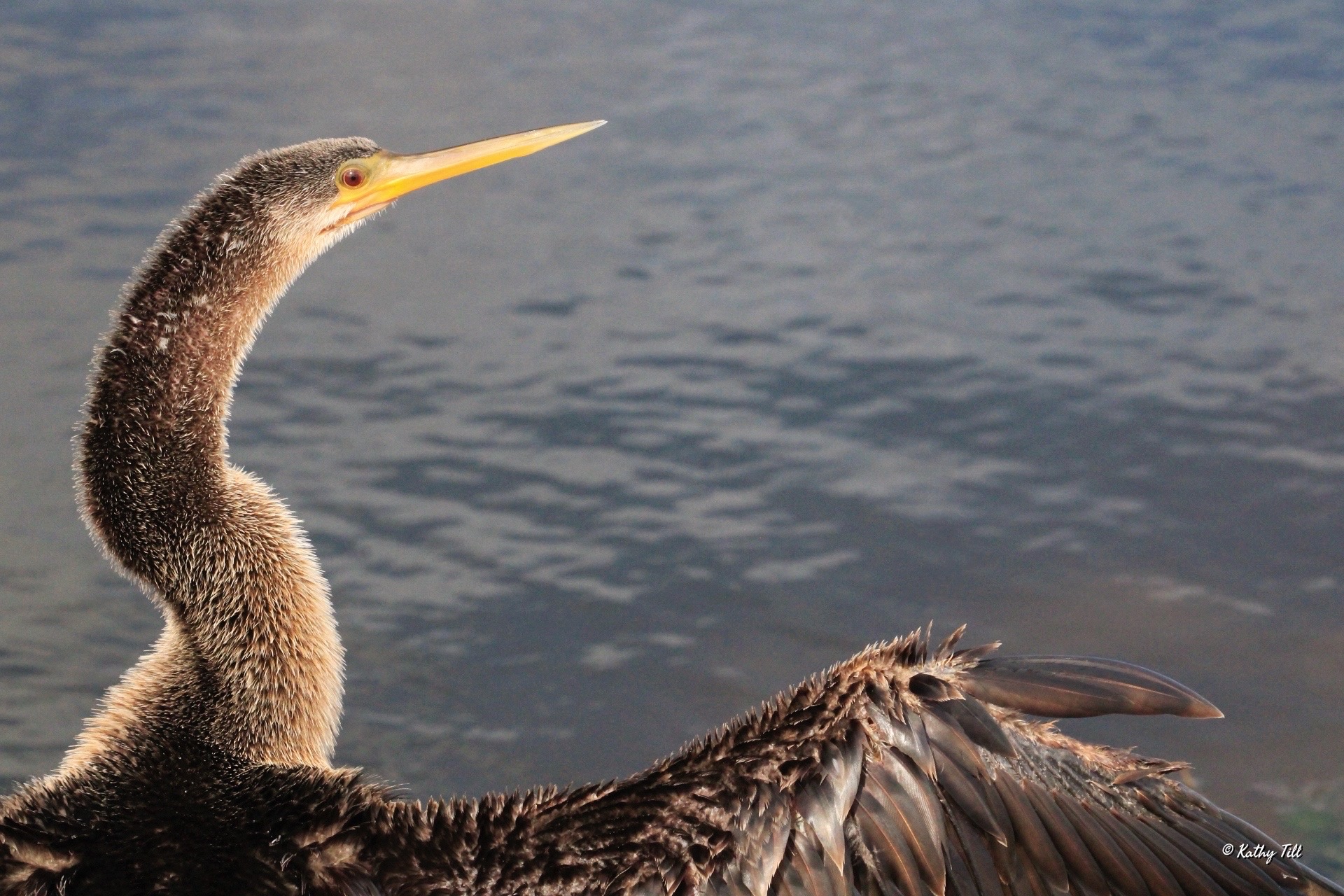


In the next installment of our Bird Bonanza, we’re heading down to the water to meet the Anhinga. Found in the southern part of the United States and into South America, they are known for striking a post when emerging from the water.
Stealth swimmers, Anhingas, are challenging to photograph because they dive quickly and go a long distance before re-emerging.
Check out some more interesting facts about this magnificent bird.
Did You Know:
- When Anhingas aren’t slyly swimming through shallow waters with only their head sticking out, they are easy to spot hanging themselves out to dry. Look around the borders of lakes and ponds with forested edges for asunning bird. In the heat of the late afternoon, look up in the sky for Anhingas, taking advantage of rising thermals. Despite being a waterbird, they soar quite well and are frequently seen soaring at great heights with a distinctive cross-shaped silhouette.
- The Anhinga’s distinctive shape earned it the nickname “water turkey” for its turkeylike tail, and “snake bird” for its long snakelike neck as it slithers through the water.
- Unlike most waterbirds, the Anhinga doesn’t have waterproof feathers. While that may seem like a disadvantage for their watery lifestyle, their wet feathers and dense bones help them slowly
- The name Anhinga comes from the Tupi Indians in Brazil, meaning “devil bird” or “evil spirit of the woods.”
- The oldest recorded Anhinga was at least 12 years old when it was shot in Louisiana in 1948.








Leave a Reply