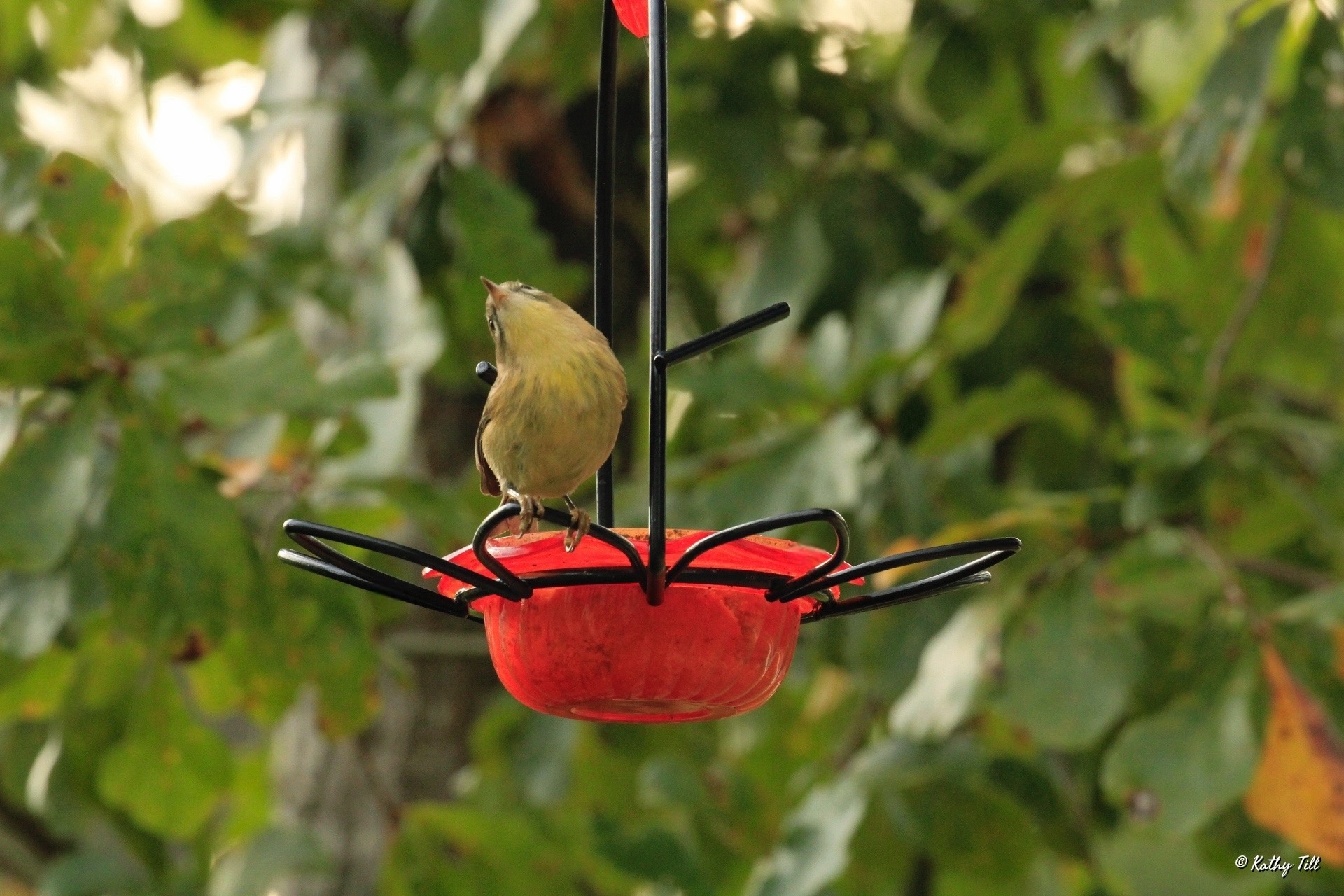


A Sweet and Happy Little Bird
The color of a bright star or perhaps twinkling lights on Christmas tree, let’s meet the Pine Warbler as we continue our Bird Bonanza. This tiny bird that will capture your attention and captivate your imagination. Their striking colors and adorable antics are sure to turn heads and always brighten your day.
Frequent visitors to the backyard feeders in the winter, they arrive in great numbers to enjoy a meal. Their sweet little rapid-fire chirps only add to their happy demeanor. Let’s take a closer look at this delightful feathered friend!
Did You Know:
- The only warbler that regularly eats seeds, the Pine Warbler will eat millet, cracked corn, sunflower seed, peanuts, and suet from elevated feeders in winter. It may also eat fruits from bushes and vines, like bayberry, flowering dogwood, grape, sumac, persimmon, and Virginia creeper.
- Most warblers leave the continental U.S. for winter. The Pine Warbler stays in the Southeast and is one of the first to return northward in spring. It arrives as early as February in areas just north of the wintering range and may begin breeding by late April.
- Individual Pine Warblers can show physical differences according to their diets. Birds that were experimentally fed with mostly seeds developed larger gizzards (the organ that crushes food into pieces) and longer digestion times. While birds that ate fruit had longer intestines and shorter digestion times.
- The oldest recorded Pine Warbler was a female, and at least 7 years, 10 months old when she was recaptured and rereleased during banding operations in Florida in 2013.
- Migrant Pine Warblers from the northern part of the range join resident Pine Warblers in the southern United States in winter. Sometimes they form large flocks of 50 to 100 or more.
- All of the above facts are provided by the Cornell Lab of Ornithology. They are one of the leading authorities worldwide on the subject of birds. Click here to learn more.





Leave a Reply