


Fish Beware!
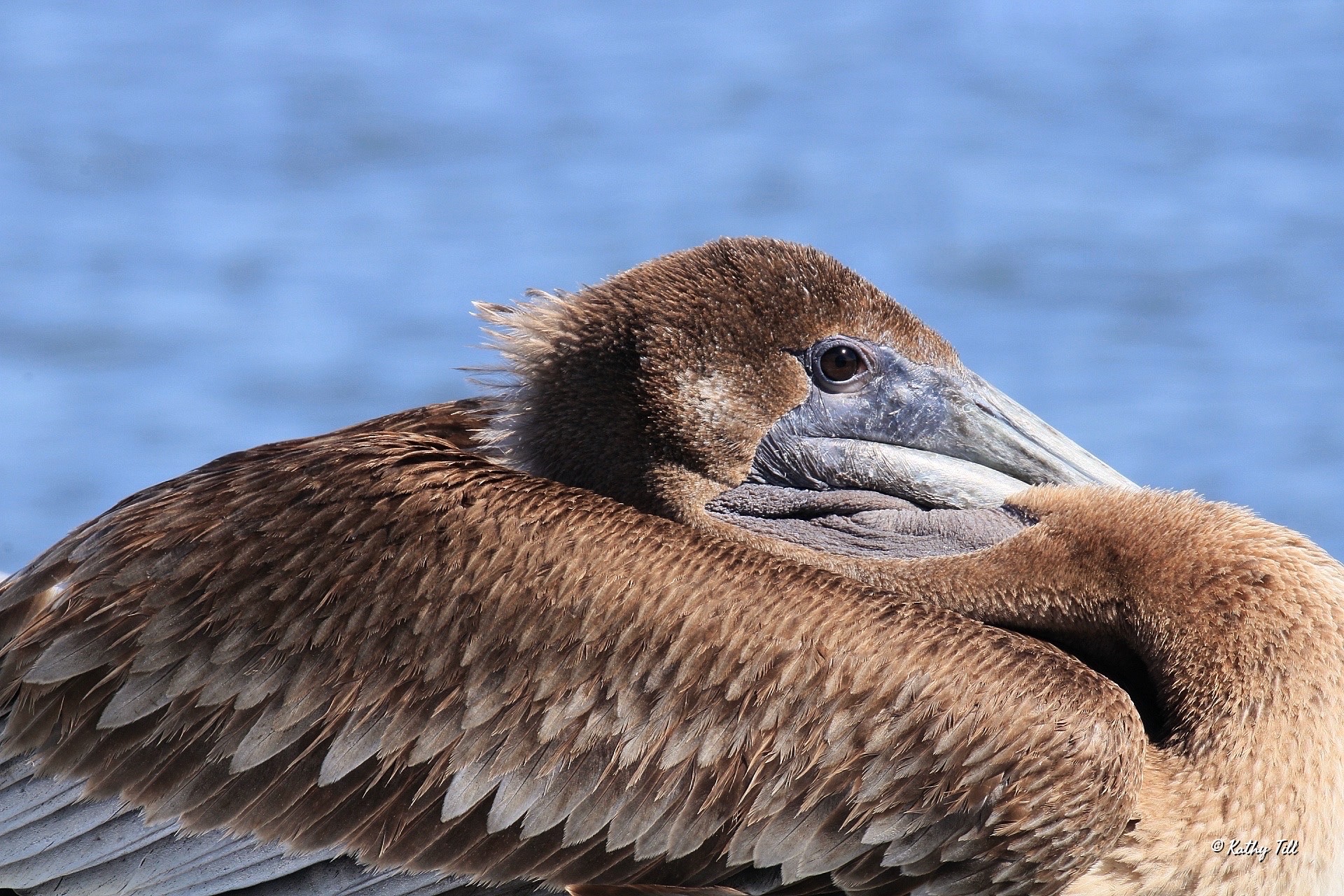
As we continue our Bird Bonanza, we’re back down at the water again to meet the Brown Pelican. While quite large, don’t let their size fool you. They are very agile in the air, and exceptional at diving and catching fish in the water. Often, you can witness them flying in a squadron very low across the surf. Or pehaps you might “catch one” dive with amazing speed and force into the water to scoop up their meal. Either way, these amazing birds are quite impressive.
And if you are lucky enough to see one up close, their piercing blue eyes will surely captivate you as they peer into your soul! Let’s learn more about these fascinating birds.
Did You Know:
- The Brown Pelican is a comically elegant bird with an oversized bill, sinuous neck, and big, dark body. Squadrons glide above the surf along southern and western coasts, rising and falling in a graceful echo of the waves. They feed by plunge-diving from high up, using the force of impact to stun small fish before scooping them up. They are fairly common today—an excellent example of a species’ recovery from pesticide pollution that once placed them at the brink of extinction.
- To find Brown Pelicans, head to the southern coasts of the US (Atlantic, Gulf, or Pacific) and look for huge birds gliding low over the water—check nearby gulls and cormorants as a size reference. These birds plunge into the water to feed. The huge splashes they make can, from out of the corner of your eye, look like a whale’s spout. If you see a splash, look for the bird on the water’s surface as it drains water from its throat pouch, or scan for other pelicans circling around to dive in the same spot. If you can’t find pelicans over the water, head to a jetty, mudflat, or estuary to look for groups of them resting.
- While the Brown Pelican is draining the water from its bill after a dive, gulls often try to steal the fish right out of its pouch—sometimes while perching on the pelican’s head. Pelicans themselves are not above stealing fish, as they follow fishing boats and hang around piers for handouts.
More Interesting Facts
- The closely related Peruvian Pelican lives along the Pacific Coast of South America from southern Ecuador to Chile. It’s a little larger than a Brown Pelican, with fine white streaking on its underparts and a blue pouch in the breeding season. These two species are the only pelicans that plunge-dive for their food.
- During a dive, the Brown Pelican tucks its head and rotates its body to the left. This maneuver is probably to cushion the trachea and esophagus—which are found on the right side of the neck—from the impact.
- The oldest Brown Pelican on record was 43 years of age.








Leave a Reply